
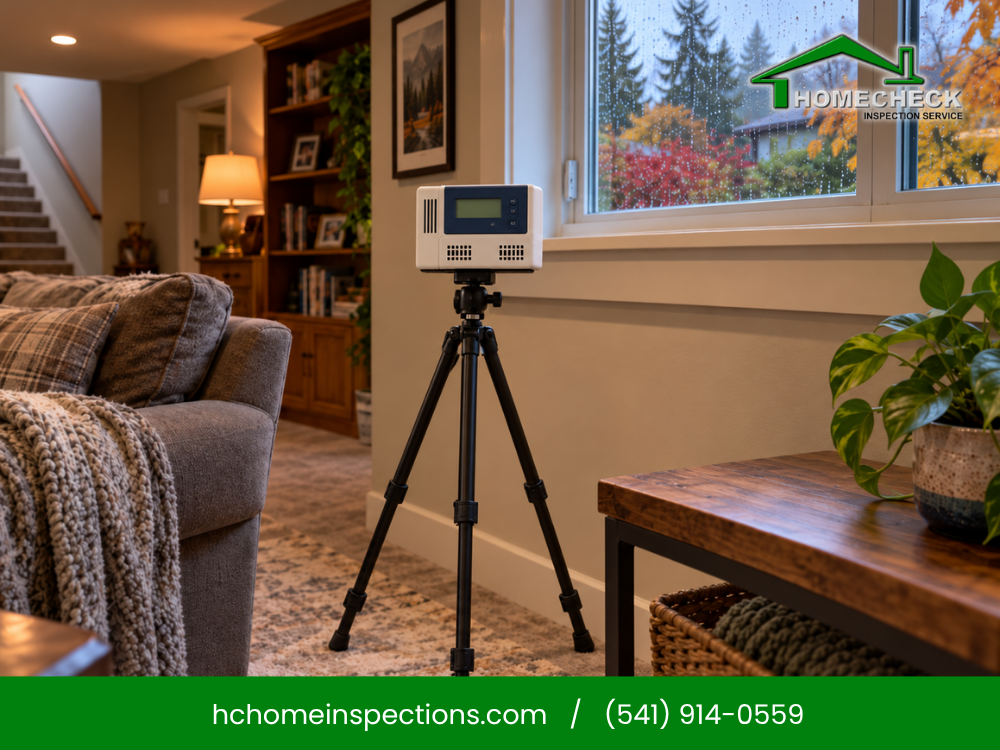
 Yes. If you are buying, selling or simply living in a Lane County home, radon testing is worth doing, and fall is a practical time to do it because windows and doors are staying shut as the weather turns wet. Radon has no smell, color or taste, so the only way to know whether a house has a problem is to measure.
Radon is a naturally occurring radioactive gas that comes from the breakdown of uranium in soil and rock. It can move up through the ground and into a home, where it can build up. The U.S. Environmental Protection Agency says radon is the second leading cause of lung cancer in the United States, after smoking, and recommends that homes be tested.
This guide to radon testing in Lane County comes from HomeCheck Inspection Service. Jeremy Moody has been inspecting homes since 2001, which is 25 years and nearly 7,500 inspections, and radon is one of the credentials he holds. Here is how testing works, why the season matters, and what happens if a result comes back high.
What Is Radon And Why Should Lane County Homeowners Care?
Radon is an invisible, odorless gas that can seep into any type of home, and homeowners should care because long-term exposure is linked to lung cancer.
It enters through the points where a house meets the ground: cracks in a slab or foundation, gaps around pipes and wires, sump pits and crawlspace floors. Old homes and new homes can both have it, and so can homes with a basement, a slab or a crawlspace. A house that looks spotless can still carry a high level.
There is no reliable way to guess. The level in one house can differ from the level next door, because it depends on the soil under each home, how the foundation is built and how air moves through the house. That is why a neighbor’s result tells you nothing about your own. Rather than rely on a general claim about the area, test the specific home you care about.
Why Is Fall A Good Time To Test For Radon?
Fall is a good time to test because a short-term radon test needs closed-house conditions, and that is how people live once the wet, cooler weather arrives.
For a short-term test, the home should be kept closed, with windows and exterior doors shut except for normal coming and going, for at least 12 hours before the test begins and for the whole test. In the Willamette Valley rain season, that is just everyday life. Closed-up homes tend to hold radon more, and heating season can pull more soil gas into a house, so a test run in fall or winter gives a realistic look at what the family breathes through the colder, wetter months.
That makes October a sensible time to schedule the test whether you are buying a home, getting ready to sell or have simply never checked your own.
How Does Radon Testing Work With A Home Inspection?
Radon testing is a separate measurement that is easily ordered with a home inspection, because a visual inspection cannot tell you how much radon is in the air.
During a whole-house inspection, Jeremy can point out the pathways radon uses, such as slab cracks, sump pits and openings in a crawlspace. But the concentration can only be found with a test device. The device is placed in the lowest livable level of the home, away from drafts, vents and exterior walls, and is left undisturbed for the testing period. Short-term tests generally run a few days. The device is then analyzed and the result is reported in picocuries per liter (pCi/L).
If you are buying, order radon testing at the start of your inspection period. A test takes days, not hours, so ordering early leaves you time to act on the result. HomeCheck offers radon testing along with whole-house, pre-listing, new construction, sewer scope and wood destroying organism inspections, so one visit can cover what you need.
What Level Of Radon Is Considered High?
The EPA recommends fixing a home when the radon level is 4.0 pCi/L or higher, and it also suggests considering action for levels between 2 and 4 pCi/L.
Your inspector reports the measured result against that benchmark. It is worth knowing that no level is entirely without risk, and the EPA notes that lowering radon reduces risk further. A single short-term result is also a snapshot. If a first result is near or above the action level, a follow-up test is a common next step before deciding on repairs.
What Happens If My Radon Test Comes Back High?
If the test comes back high, the problem can be fixed, because radon reduction is a well-established process.
The most common approach is a system that draws soil gas from beneath the foundation and vents it outside above the roofline before it can enter the living space. A qualified radon mitigation contractor designs and installs it, and a test afterward confirms that the level has come down. For a buyer, a high result is also a negotiating point: you have a number, there is a known fix, and a contractor can quote the cost.
For a seller, testing before you list lets you learn the number on your own schedule. If a system is needed, you can have it installed and confirmed rather than dealing with it under a deadline. A home that already has a mitigation system is not a warning sign. It means someone tested and acted, and the thing to confirm is that the system is running and that a recent test shows the level is where it should be.
What Else Should Lane County Homeowners Check As Homes Close Up For Fall?
Beyond radon, fall is the time to check the heating system, the moisture control around the house and the safety alarms.
-
- Heating system. It has sat idle since spring, so have it checked before you rely on it.
-
- Smoke and carbon monoxide alarms. Test them and replace batteries, because a closed-up home with a combustion appliance depends on working alarms.
-
- Crawlspace moisture. The rainy season is when damp problems show up, so check for standing water and a shifted vapor barrier.
-
- Gutters and downspouts. Make sure they carry water away from the foundation.
-
- Ventilation. Kitchen and bathroom fans should vent outdoors.
For more on how an inspection works, see our radon testing page and our home inspection services page, browse the HomeCheck blog, or visit the HomeCheck home page.
 Frequently Asked Questions About Radon Testing In Lane County
Do I need radon testing if my Lane County home is new?
Yes. A new home is not automatically low in radon. Tight construction can reduce air exchange, and soil gas can still enter through slab joints and penetrations. Testing is the only way to know.
Can a home inspector tell if a house has radon just by looking?
No. Radon has no smell, color or taste. An inspector can point out likely entry points, but the concentration can only be measured with a test device.
How long does a radon test take?
A short-term test generally takes a few days, with the house kept closed for at least 12 hours beforehand and throughout the test. Order it early if you are buying so the result arrives in time to use.
What radon level should I worry about?
The EPA recommends fixing a home at 4.0 pCi/L or higher and suggests considering action between 2 and 4 pCi/L. No level is completely risk free, and lower is better.
Is a high radon result a deal breaker when buying?
Usually not. Radon can be reduced with a mitigation system, and a high result gives you a number and a known fix to discuss when you negotiate.
Should I test before I sell my house?
Many sellers do. Testing before listing lets you learn the result on your own timeline and, if needed, have a system installed and confirmed before a buyer asks.
Who Can Test My Lane County Home For Radon?
HomeCheck Inspection Service can. Jeremy Moody is an InterNACHI Certified Professional Inspector with a radon credential, an Oregon residential general contractor background and 10 years in construction. Since 2001, he has completed nearly 7,500 inspections in 25 years of serving Lane County, so he knows how local homes are built and how they behave through the wet months. To order radon testing on its own or with a whole-house inspection, call (541) 914-0559 or schedule your home inspection online.