
 To prepare your home for the rainy season in Eugene, work from the roof down to the ground: clear the gutters, check the moss on the roof, make sure every downspout carries water away from the foundation, and look at the crawlspace before the wet weather settles in. September is the right month to do it, because the dry weather that makes these jobs easy does not last.
Lane County homes spend the summer dry and the fall, winter and spring wet. That cycle is hard on a house. Water finds the weak points the dry months hid, and a small gutter or drainage problem in September can turn into a wet crawlspace or a rotted fascia board by February. The good news is that most of what matters can be checked in a single weekend.
This guide comes from HomeCheck Inspection Service. Jeremy Moody has been inspecting homes since 2001, which is 25 years and nearly 7,500 inspections across Lane County, from Junction City and Eugene to Springfield, Cottage Grove and beyond. Here is what he looks at, and what you can check yourself.
Why Does The Rainy Season Matter So Much For Lane County Homes?
The rainy season matters because water is the most common cause of damage a home inspector finds, and the Willamette Valley delivers a long wet stretch every year.
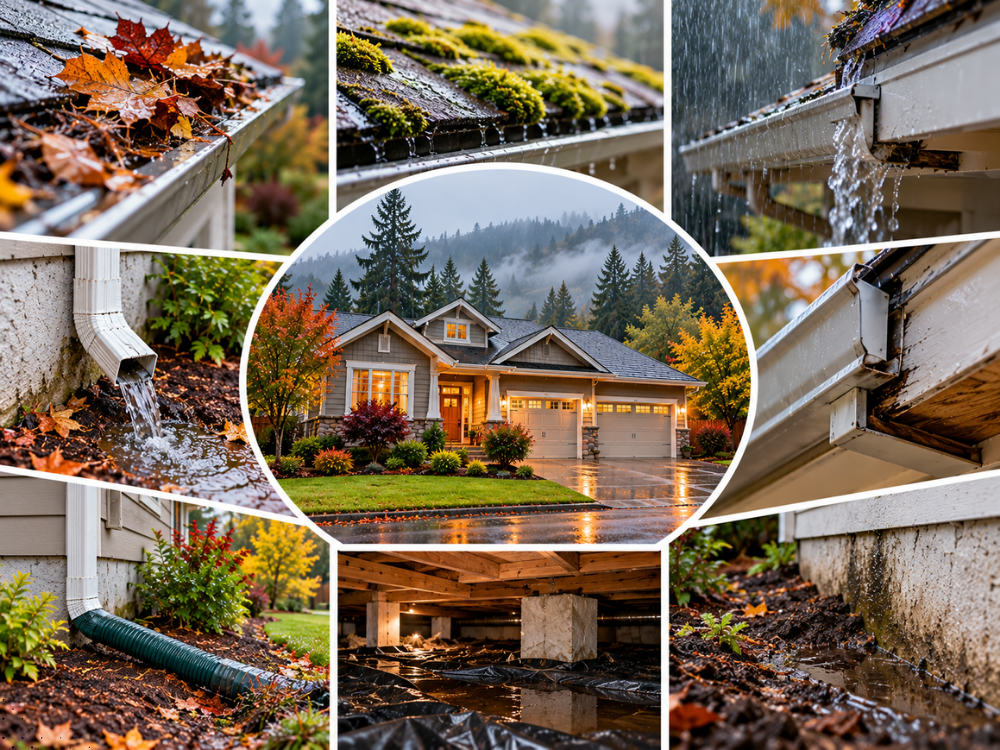
A house here is built to shed water, but it can only do that if the system works from the shingles to the soil. When one link fails, such as a clogged gutter, a downspout that dumps at the foundation or a patch of roof covered in moss, water goes where it should not. It soaks fascia and siding, settles against the foundation, or works its way into the crawlspace.
Jeremy brings a different view to this than many inspectors. Before he was an inspector he worked in construction, and he has an Oregon residential general contractor background and 10 years in construction. He has also personally renovated 11 homes. He has seen how water damage starts, and how cheap it is to stop early compared with repairing it later.
How Do I Check My Gutters And Downspouts Before The Rain Starts?
Start by clearing the gutters of leaves, needles and the grit that washes off the roof, because a gutter full of debris overflows right at the wall you are trying to protect.
After the gutters are clear, run water through them with a hose and watch. You are looking for four things:
-
- Water pooling or standing in any section, which means the gutter has lost its slope.
-
- Overflow at the corners or seams.
-
- Gutters pulling away from the fascia, or fasteners that have loosened.
-
- Downspouts that end right at the foundation.
That last item is the one that causes the most trouble. A downspout should carry water several feet away from the house through an extension or underground drain line, so it does not soak the soil beside the foundation. If your downspouts end at the wall, adding extensions is one of the least expensive and most effective things you can do to prepare your home for the rainy season.
Use a stable ladder and have someone hold it. If the gutters are high or the roof is steep, hire a professional rather than take a risk.
What Should I Do About Moss On My Roof?
If your roof has moss, have it looked at before the rain begins, because moss holds moisture against the roofing and can shorten its life.
Moss is a fact of life in the Willamette Valley, and a little on a shaded roof slope is not an emergency. The concern is thick growth that lifts shingle edges, traps water and holds it against the surface. Look from the ground, or with binoculars, for these signs:
-
- Thick mats of moss, especially on north-facing or shaded slopes.
-
- Shingles that are curled, cracked or missing.
-
- Loose or exposed flashing around the chimney, vents and skylights.
-
- Granules collecting in the gutters.
Be careful with how moss gets removed. Aggressive scraping or pressure washing can tear granules off shingles and shorten the life of the roof you are trying to protect. Ask a roofer about gentle removal, and have any damaged flashing repaired first. Do not walk a wet or mossy roof yourself.
How Does The Ground Around My House Affect The Crawlspace?
The ground around your house affects the crawlspace because soil that slopes toward the foundation sends rainwater to the exact place you do not want it.
Walk the perimeter of the house and check that the soil slopes gently away from the walls. Also look for these:
-
- Soil or mulch piled up against the siding.
-
- Planters or beds that hold water against the foundation.
-
- Low spots where water has pooled before.
-
- Blocked or missing foundation vents on a crawlspace home.
Many Lane County homes sit on crawlspaces, and moisture is the main thing inspectors check for there. If you can safely look inside before the rains, check for standing water, damp soil, a vapor barrier that has shifted or torn, insulation that has fallen or looks wet, and any musty smell. Crawlspaces that are dry in September can look very different in January, which is why the pre-rain look gives you a baseline. A wet crawlspace is a good reason to call an inspector rather than guess.
 What Else Should I Check Inside The House?
Inside, check the places where outside moisture shows itself first: ceilings, window frames, the attic and the walls near the foundation.
Look for brown stains on ceilings, peeling paint near windows, damp or musty smells in closets on exterior walls, and condensation that builds up on window glass. In the attic, look for daylight where there should be none, wet insulation and stains on the roof sheathing. Make sure bathroom and kitchen fans vent outdoors rather than into the attic, since trapped humidity makes the damp season worse.
Also clean up around the home’s exterior details. Caulk that has cracked around windows, doors and trim lets water in. Siding that touches the soil stays wet. These small items are easy to fix in dry September weather and expensive to ignore.
When Is It Worth Calling A Home Inspector Before The Rains?
It is worth calling an inspector when you have found a problem you cannot size up yourself, when you are about to buy or sell, or when your home has not had a professional look in years.
A maintenance inspection gives you a clear list of what to fix first and what can wait. Jeremy is an InterNACHI Certified Professional Inspector, and HomeCheck offers whole-house, maintenance, pre-listing and wood destroying organism (WDO) inspections for homes across Lane County. If you are selling, a pre-listing look before the wet weather can reveal moisture issues while they are still easy to deal with. If you are buying, ask about the crawlspace and drainage, since the rainy season is when a house shows how it handles water.
For more about what an inspection covers, see our home inspection services page, read our latest guides on the HomeCheck blog, or start at the HomeCheck home page. For the checklist behind these steps, our maintenance inspection page explains what is included.
Frequently Asked Questions About Preparing For The Rainy Season
When should I start getting my Eugene home ready for the rainy season?
Start in September while the weather is still dry. Gutter cleaning, roof checks and drainage fixes are easier and safer before the rain arrives, and any repairs you find can be scheduled before the wet weather makes them urgent.
How often should I clean my gutters in the Willamette Valley?
At least once before the rainy season, and again after the leaves fall. Homes near trees may need more frequent cleaning because leaves and needles clog gutters quickly.
Is moss on my roof a problem?
It can be. Moss holds moisture against roofing and can lift shingle edges. A small amount on a shaded slope is common, but thick growth should be evaluated by a roofer, and removed gently so the shingles are not damaged.
How can I tell if my crawlspace has a moisture problem?
Look for standing water, damp soil, a torn or shifted vapor barrier, wet or fallen insulation and a musty odor. If you see any of these, have an inspector evaluate it before the wet weather gets worse.
Which direction should the ground slope around my house?
Away from the foundation. Soil that slopes toward the house directs rainwater to the foundation and crawlspace, so regrading low spots and extending downspouts are some of the most useful fixes.
Do I need a home inspection just to prepare for the rainy season?
You do not need one for routine upkeep, but a maintenance inspection is worthwhile if you have not had your home checked in years, if you notice signs of moisture, or if you are about to buy or sell.
Who Can Help Me Check My Home Before The Rain Arrives?
HomeCheck Inspection Service can. Since 2001, Jeremy Moody has completed nearly 7,500 inspections in 25 years of serving Lane County. He is an InterNACHI Certified Professional Inspector with an Oregon residential general contractor background and 10 years of experience in construction, and he sees how Willamette Valley homes handle water every day. If you want a clear, plain-spoken look at your home before the rains begin, call (541) 914-0559 or schedule your home inspection online.