
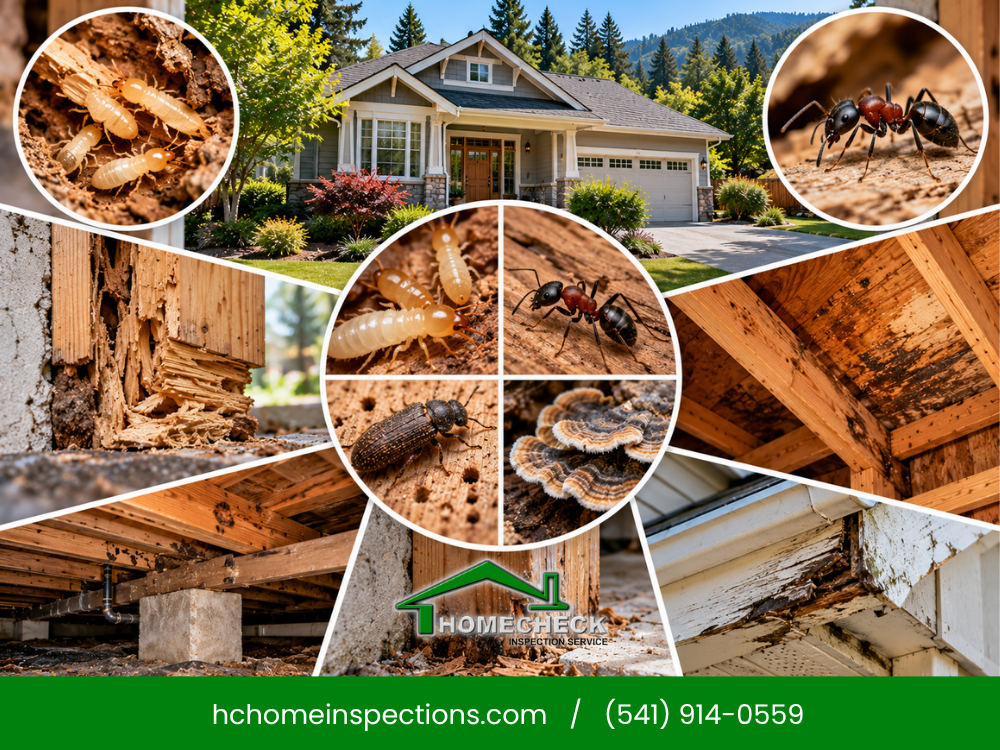
 A wood destroying organism inspection is a visual inspection of a home for evidence of insects and fungi that damage wood, including termites, carpenter ants, wood-boring beetles and wood-decay fungi, which is the cause of rot. In Lane County, where the Willamette Valley’s wet winters leave wood damp for months, a wood destroying organism inspection is one of the most useful add-ons to a standard home inspection, and some HUD and VA-backed purchases call for a WDI report, so it is worth asking your lender early.
Jeremy Moody of HomeCheck Inspection Service holds a Wood Destroying Organism credential in addition to being an InterNACHI Certified Professional Inspector. He has been inspecting homes since 2001, and across 25 years and nearly 7,500 inspections he has learned that moisture, not insects, is usually where wood damage begins. This guide explains what a wood destroying organism inspection covers, what the HUD/VA WDI report is, and what Willamette Valley homeowners can do to protect their homes.
What Is A Wood Destroying Organism?
A wood destroying organism, or WDO, is any living thing that feeds on or breaks down the wood in a building. The main groups are termites, carpenter ants, wood-boring beetles and wood-decay fungi.
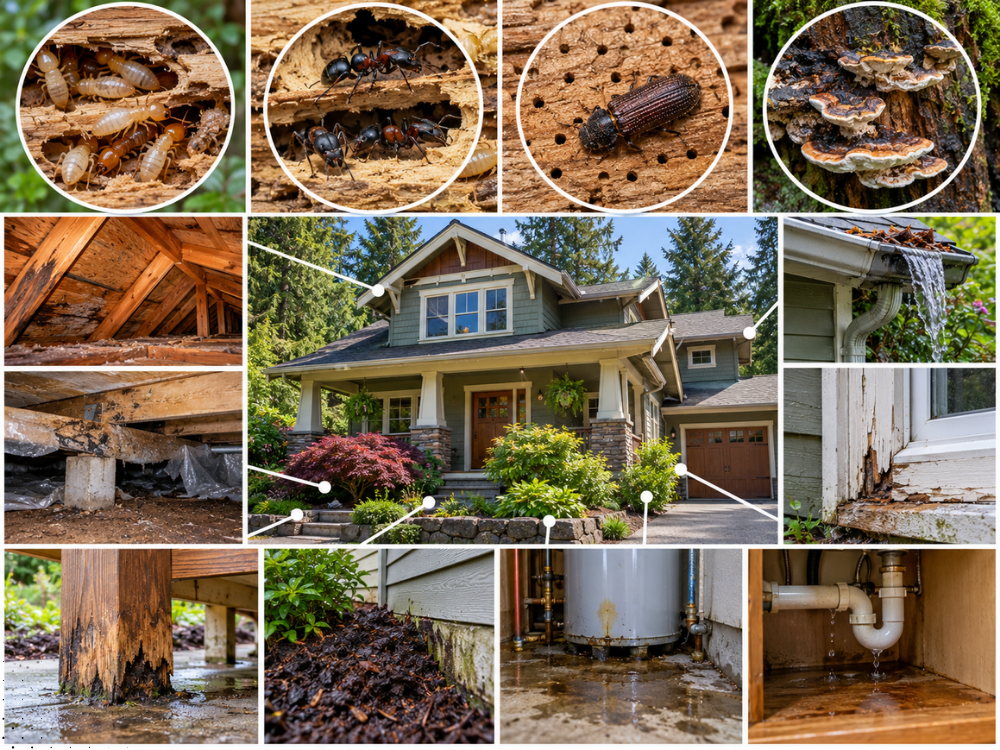
Each does damage differently. Termites eat wood for food. Carpenter ants excavate wood to build nests but do not eat it. Wood-boring beetles lay eggs in wood, and their larvae tunnel through it. Wood-decay fungi, the organisms behind rot, break wood down when it stays wet. The last group matters especially in the Willamette Valley, because the common thread across all of them is moisture. Wood that stays damp attracts them and wood that stays dry mostly does not.
What Does A Wood Destroying Organism Inspection Cover?
A wood destroying organism inspection covers the accessible areas of the home where wood is exposed or near moisture: the crawlspace, foundation, sill plates, floor framing, attic, garage, decks, porches, window and door trim, and the exterior siding. The inspector looks for live insects, droppings, mud tubes, damaged wood, and conditions that favor future infestation.
It is a visual inspection, which means the inspector reports on what can be seen and reached. Walls, insulation and finished surfaces can hide damage, and the report will note areas that were inaccessible. With an Oregon residential general contractor background and 10 years in construction, Jeremy knows how floors, walls and foundations are put together, so he knows where hidden problems are most likely to start and which areas deserve a closer look.
Learn more about wood destroying organism inspections or see the full list of HomeCheck inspection services.
Why Do Willamette Valley Homes Have So Many Moisture And Rot Problems?
Willamette Valley homes face moisture problems because the valley has a long rainy season, dry summers that mask winter damage, and many homes with crawlspaces. Wood that gets wet repeatedly, even for a few weeks at a time, can begin to decay over the years.
The usual starting points are familiar to anyone who has owned a home here:
-
- Gutters and downspouts that overflow or discharge next to the foundation.
-
- Soil or landscaping piled against siding or foundation wood.
-
- Crawlspaces with standing water, missing or torn vapor barriers, or poor ventilation.
-
- Deck posts and ledger boards in contact with soil or sealed in with trapped water.
-
- Leaking plumbing, especially under sinks, around tubs and at water heaters.
-
- Window and door trim with failed caulk or paint.
August is a practical month to look, because the dry season lets the inspector see crawlspaces and exterior wood in their driest condition, which makes active moisture problems easier to tell apart from old, dried evidence. Fixing the water source is almost always the first step in dealing with rot.
What Is A WDI Report For HUD And VA Loans?
A WDI report, short for wood destroying insect report, is a written report on the presence or evidence of wood destroying insects in a home, and it is commonly associated with HUD- and VA-backed financing. Whether one is needed depends on the loan and the lender, so the practical step is to ask your lender or loan officer early in the process.
HomeCheck provides WDI reports for HUD and VA transactions as one of its services. A WDI report is focused on wood destroying insects, while a broader wood destroying organism inspection can also address conditions such as decay. If you are unsure which one you need, ask before ordering so you get what the loan requires. Many buyers combine it with a whole-house inspection so everything is reviewed in one visit.
What Signs Of Wood Damage Can Homeowners Spot Themselves?
Homeowners can spot several early warning signs without any tools: soft or spongy wood that gives when pressed, paint that bubbles or peels, mud-like tubes along foundation walls, small piles of sawdust-like material near wood, discarded insect wings near windows, and a musty smell in the crawlspace or basement area.
If you see any of these, take photos, do not disturb the area and have it looked at. Treat any finding as a moisture question first. Ask where the water is coming from, and how long it has been happening. A qualified inspector can tell you whether the evidence is active, old or past treatment, and whether you need a pest control company, a carpenter or simply better drainage.
 How Can You Protect Your Home From Rot And Wood Destroying Organisms?
The best protection is keeping wood dry and keeping wood away from soil. Keep gutters clear, extend downspouts away from the foundation, keep soil and mulch several inches below siding, repair plumbing leaks quickly, and make sure the crawlspace stays dry.
Stack firewood away from the house and off the ground, and keep vegetation trimmed back so air can move. Repaint or recaulk trim before the rains return. Late summer is the time to do this, with the fall rains coming.
Frequently Asked Questions About Wood Destroying Organism Inspections
What is the difference between a WDO inspection and a WDI report?
A WDI report focuses on wood destroying insects. A wood destroying organism inspection is broader and can also address wood-decay fungi, which cause rot. Ask your lender which one your loan requires.
Do I need a wood destroying organism inspection when buying a home in Lane County?
It is not required for every purchase, but it is a smart add-on in a region with a long rainy season and many crawlspaces. If your loan is HUD- or VA-backed, ask your lender whether a WDI report is needed.
Can a wood destroying organism inspection find damage inside walls?
It is a visual inspection, so it covers what the inspector can see and reach. Damage hidden inside walls or under finishes may not be visible, and the report notes areas that could not be inspected.
Is rot always caused by insects?
No. Rot is caused by wood-decay fungi, which need moisture. Insects are a separate group, though damp, decaying wood can attract them.
How long does a wood destroying organism inspection take?
It depends on the size of the home and how accessible the crawlspace and attic are. It is often done alongside a whole-house inspection, which adds a modest amount of time.
Ready To Schedule A Wood Destroying Organism Inspection In Lane County?
HomeCheck Inspection Service has served Lane County since 2001. Jeremy Moody is an InterNACHI Certified Professional Inspector with a Wood Destroying Organism credential, an Oregon residential general contractor background, 10 years in construction and nearly 7,500 inspections completed over 25 years. To schedule a wood destroying organism inspection or a WDI report, call (541) 914-0559 or schedule your home inspection online.