
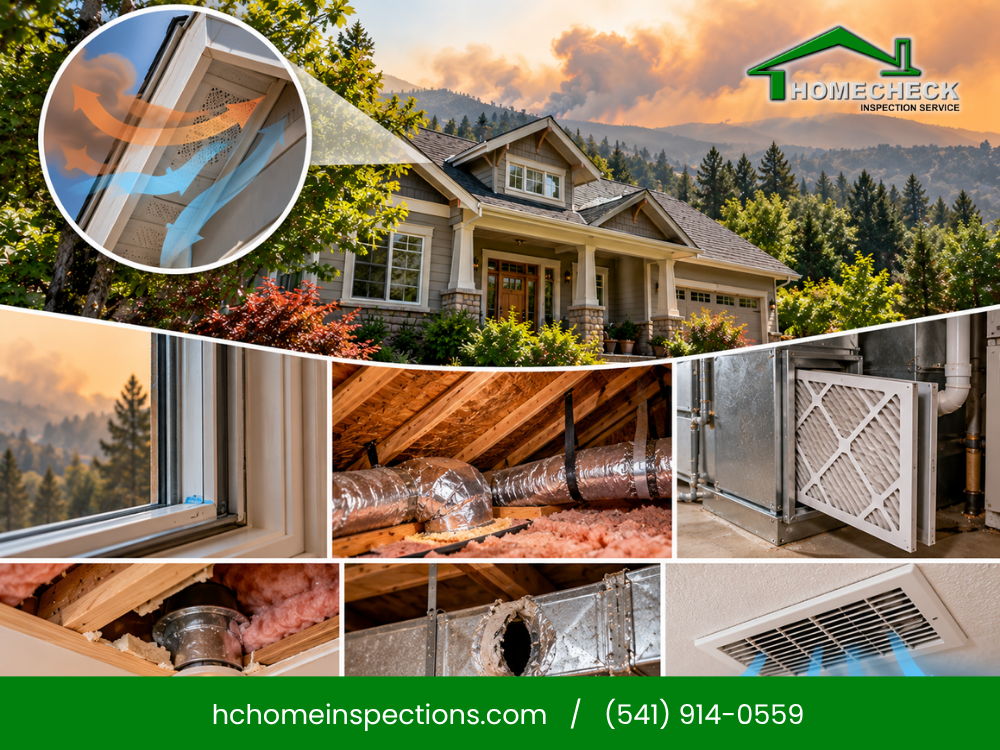
 Wildfire Smoke Season Un Lane County: What Homeowners Should Check Around The House
Wildfire smoke season in Lane County brings more than hazy skies and reduced outdoor air quality. It also reminds homeowners to pay attention to how well their homes are sealed, insulated, and ventilated. Small gaps around windows and doors, openings between the attic and living spaces, and poorly sealed exterior penetrations can allow outdoor air to enter the home.
While a home inspection cannot measure wildfire smoke particles or determine indoor air quality, it can help identify visible building conditions that may influence comfort, energy efficiency, and how outdoor air enters the house.
Jeremy Moody of HomeCheck Inspection Service has been inspecting Willamette Valley homes since 2001. With nearly 7,500 inspections completed and a background in residential construction, Jeremy understands how attic insulation, ventilation, exterior openings, and general building conditions affect residential properties.
This guide explains what homeowners in Eugene, Springfield, and surrounding Lane County communities should know about wildfire smoke season, which home maintenance steps may help, and what a professional home inspection can evaluate.
How Does Wildfire Smoke Enter A House?
Wildfire smoke can enter a home through open windows, doors, and small gaps in the building envelope. Even when windows are closed, outdoor air may enter through openings around plumbing penetrations, electrical fixtures, attic access panels, and exterior wall connections.
Homes throughout the Willamette Valley vary in age, construction materials, and insulation methods. Older properties may have gaps associated with aging weatherstripping or original construction practices, while newer homes can also develop openings around building components.
Some common areas homeowners should pay attention to include:
- Windows and exterior doors: Worn weatherstripping, loose seals, and visible gaps may allow outdoor air to enter.
- Attic access panels: Poorly fitted attic hatches can create openings between the attic and living spaces.
- Exterior wall penetrations: Openings around plumbing lines, electrical conduits, and other building components may need sealing.
- Siding and exterior trim: Deteriorated caulking or separated materials can create additional air pathways.
- Ceiling penetrations: Gaps around fixtures and other ceiling openings may allow air movement between the attic and occupied rooms.
A visual home inspection can document accessible, observable conditions in these areas. However, identifying every air leakage pathway requires specialized testing, such as a blower door assessment performed by a qualified professional.
Why Does Attic Insulation Matter During Wildfire Season?
Attic insulation plays an important role in maintaining indoor comfort, particularly during warm summer weather in Eugene and Springfield.
During wildfire smoke events, homeowners are often advised to keep windows and exterior doors closed when outdoor air quality is poor. This can make the condition of the home’s insulation and building envelope especially important for maintaining comfortable indoor temperatures.
An attic with insufficient insulation or uneven coverage can allow more heat to transfer into the living spaces below.
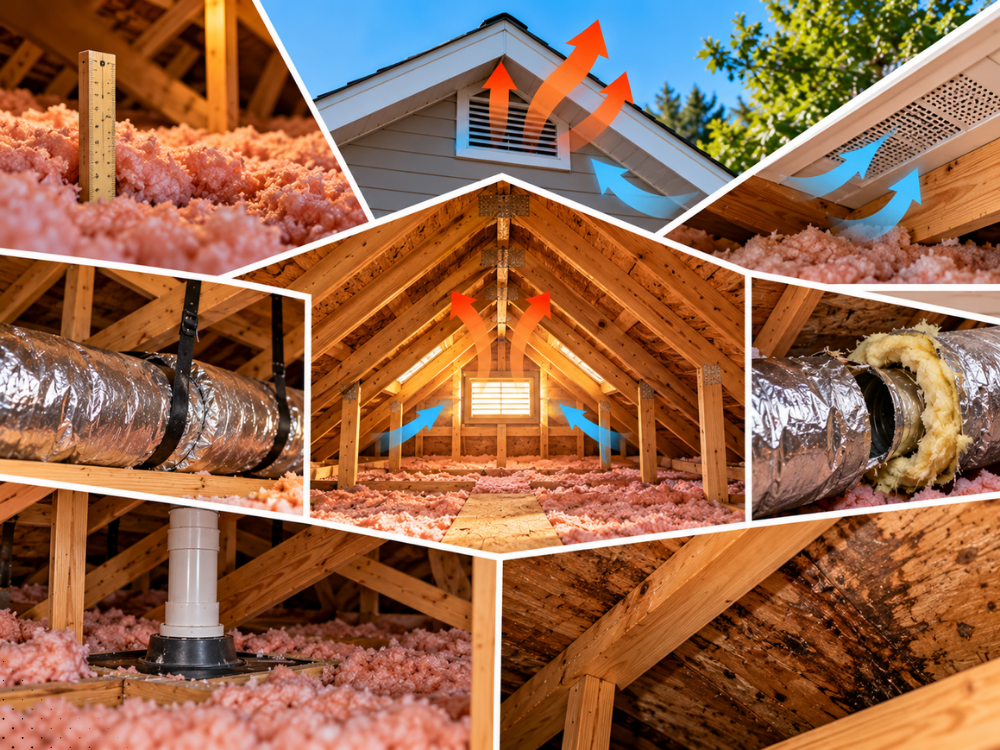
During an accessible attic inspection, Jeremy may evaluate visible conditions such as:
- Insulation depth and general coverage.
- Missing, displaced, or compressed insulation.
- Gaps around accessible attic openings.
- Insulation that obstructs intended ventilation openings.
- Visible moisture staining or deterioration on roof framing and decking.
- Accessible attic access panels and their general condition.
A home inspection provides a visual assessment of these components rather than a complete energy efficiency evaluation.
For homeowners planning improvements, the inspection findings can help identify areas that may deserve further attention.
Learn more about what a whole-house inspection covers.
What Should Homeowners Know About Attic Ventilation?
Attic ventilation is designed to help manage heat and moisture within the attic space. Common ventilation components include soffit vents, ridge vents, gable vents, and roof vents.
During wildfire smoke events, some homeowners may wonder whether closing attic vents will prevent smoke from entering their homes.
Permanently blocking attic ventilation is generally not recommended without a qualified evaluation of the attic’s ventilation design.
Blocking vents can interfere with intended airflow and contribute to moisture accumulation or excessive attic temperatures under certain conditions.
Instead, homeowners should focus on maintaining the separation between the attic and living spaces.
Important areas to consider include:
- Attic hatches that do not close tightly.
- Visible gaps around accessible ceiling penetrations.
- Missing insulation near attic access openings.
- Ventilation openings blocked by insulation.
- Signs of moisture accumulation on attic framing or roof decking.
Jeremy evaluates visible attic conditions as part of a general home inspection when the area is safely accessible.
The goal is to document observable building conditions and help homeowners understand which components may need maintenance or further evaluation.
 Can Poorly Sealed Windows And Doors Affect Indoor Comfort?
Yes. Windows and exterior doors are important parts of the building envelope, and their condition can influence how outdoor air enters a home.
During wildfire smoke season, homeowners often keep windows closed for extended periods. Worn weatherstripping, deteriorated caulking, and poorly fitting doors can still allow outdoor air to enter.
A home inspection may identify visible conditions such as:
- Damaged or missing weatherstripping.
- Deteriorated caulking around accessible window frames.
- Doors that do not close or latch properly.
- Visible separation around exterior trim.
- Damaged window components.
- Moisture staining near window or door openings.
These findings do not establish how much wildfire smoke is entering the home, but they can help homeowners identify maintenance needs.
Simple improvements such as replacing worn weatherstripping or sealing appropriate exterior gaps may improve comfort and reduce unwanted air movement.
What Is The Difference Between A Home Inspection And An Indoor Air Quality Assessment?
A standard home inspection and an indoor air quality assessment serve different purposes.
A home inspection is a visual evaluation of accessible building components and systems. It documents observable conditions involving the structure, roof, attic, insulation, ventilation components, exterior surfaces, and other areas included in the inspection.
An indoor air quality assessment involves specialized equipment and testing methods to evaluate airborne particles, pollutants, or other environmental conditions.
HomeCheck Inspection Service does not perform wildfire smoke particle testing or specialized indoor air quality assessments as part of a standard home inspection.
However, Jeremy can identify visible building conditions that may deserve attention, including:
- Missing or insufficient attic insulation.
- Visible openings around accessible building penetrations.
- Damaged exterior seals.
- Moisture staining or visible indications of water intrusion.
- Obstructed attic ventilation.
- General building maintenance concerns.
If a homeowner needs wildfire smoke particle measurements, detailed air leakage testing, or specialized ventilation equipment evaluation, an appropriately qualified specialist should be consulted.
As an InterNACHI Certified Professional Inspector, Jeremy follows a visual inspection approach and communicates findings within the scope of the inspection.
For additional information about residential inspection standards, visit InterNACHI.
What Can Lane County Homeowners Do During Wildfire Smoke Season?
When wildfire smoke affects Eugene, Springfield, or surrounding communities, homeowners can take practical steps to reduce outdoor smoke entering their living spaces.
The following maintenance and household practices may help:
- Keep windows and exterior doors closed: Limit unnecessary openings when outdoor air quality is poor.
- Inspect weatherstripping: Check accessible doors and windows for worn or missing seals.
- Check attic access panels: Make sure attic hatches close securely and have appropriate weatherstripping.
- Seal appropriate exterior openings: Address visible gaps around exterior penetrations using suitable materials and methods.
- Use portable air cleaners: Consider a properly sized portable HEPA air cleaner to help reduce fine particles indoors.
- Monitor local air quality: Follow current information and recommendations from local public health agencies and the EPA.
Homeowners should also follow manufacturer instructions for their heating and cooling equipment. Questions about air filtration, system operation, or equipment compatibility should be directed to a qualified HVAC professional.
Why Is Summer A Good Time To Inspect Attics And Exterior Building Conditions?
Summer provides an opportunity to evaluate visible attic and exterior conditions before the wetter fall and winter months arrive in the Willamette Valley.
Although wildfire smoke is often associated with late summer, homeowners can benefit from routine maintenance throughout the year.
A general home inspection may identify conditions such as:
- Uneven or missing attic insulation.
- Visible moisture staining from previous water intrusion.
- Deteriorated exterior caulking.
- Damaged siding or trim.
- Blocked attic ventilation openings.
- Gaps around accessible exterior penetrations.
- Roofing components showing visible wear.
Addressing appropriate maintenance items before the rainy season can help homeowners maintain their properties and plan future improvements.
An inspection is not a guarantee that a home will remain free of moisture or air quality concerns. It provides a documented assessment of visible conditions at the time of the inspection.
Should Homebuyers And Sellers Consider Wildfire Season During A Home Inspection?
Wildfire smoke season is one more reason for homebuyers and sellers to understand the condition of a property’s building envelope, attic insulation, and ventilation components.
For buyers, a professional home inspection can provide information about visible property conditions before completing a purchase.
For sellers, a pre-listing inspection can help identify maintenance items that may be worth addressing before placing the property on the market.
Some relevant inspection findings may include:
- Missing attic insulation.
- Worn exterior door seals.
- Visible gaps around building penetrations.
- Deteriorated exterior materials.
- Attic moisture staining.
- Obstructed attic ventilation.
These conditions are important to understand regardless of whether wildfire smoke is present.
HomeCheck Inspection Service provides residential inspections for buyers, sellers, and homeowners throughout Eugene, Springfield, Junction City, Cottage Grove, and surrounding Lane County communities.
For more seasonal home maintenance information, visit the HomeCheck Inspection Service blog.
Frequently Asked Questions About Wildfire Smoke Season In Lane County
Can a home inspector determine whether wildfire smoke is entering my house?
A standard home inspection cannot measure wildfire smoke infiltration or determine indoor smoke particle concentrations. However, an inspector may identify visible gaps, damaged weatherstripping, and other building conditions that could allow outdoor air to enter.
Specialized air leakage testing or indoor air quality testing requires a qualified professional.
Does attic insulation help during wildfire smoke season?
Attic insulation helps reduce heat transfer between the attic and living spaces, supporting indoor comfort when windows remain closed during smoky weather.
Insulation alone does not filter wildfire smoke or eliminate air leakage. Proper installation and attention to appropriate air sealing are also important.
Should I close my attic vents when wildfire smoke is present?
Homeowners should not block attic vents without professional guidance. Attic ventilation serves an important role in managing heat and moisture. Maintaining appropriate separation between the attic and living spaces is generally a better approach.
Can a home inspection identify gaps around windows and doors?
Yes. A standard visual inspection may identify accessible, observable conditions such as damaged weatherstripping, deteriorated caulking, and doors or windows that do not close properly.
However, a visual inspection does not measure the home’s overall airtightness.
Does HomeCheck Inspection Service perform HVAC inspections or indoor air quality testing?
HomeCheck Inspection Service focuses on residential home inspections and the visual evaluation of accessible building components. The company does not offer specialized HVAC performance evaluations or wildfire smoke air quality testing.
Homeowners needing those services should consult qualified HVAC or indoor air quality professionals.
When is a good time to schedule a home inspection in Eugene or Springfield?
A home inspection can be valuable throughout the year. Summer inspections can provide an opportunity to evaluate visible attic insulation, exterior materials, and general property conditions before the rainy season.
Buyers and sellers can also schedule inspections as part of their real estate transactions.
Schedule A Home Inspection In Eugene, Springfield, Or Lane County
Understanding the condition of your home is important in every season, including periods of wildfire smoke and summer heat.
HomeCheck Inspection Service has served Willamette Valley homeowners since 2001. Jeremy Moody is an InterNACHI Certified Professional Inspector with nearly 7,500 completed inspections, an Oregon residential general contractor background, and 10 years of construction experience.
Whether you are purchasing a home, preparing to sell, or looking for a professional evaluation of your property’s visible condition, HomeCheck Inspection Service provides detailed residential inspections to help you make informed decisions. Call (541) 914-0559 or schedule your home inspection online.