
 In a lot of the country, “before the cold sets in” means shutting off hose bibs and watching the forecast for snow. In Eugene, Springfield and the rest of the Willamette Valley, the change looks different. The dry summer is over, the rain arrives and stays, the days get short, and the windows and doors close for months.
That shift puts a different kind of load on a house. Heating systems that sat idle since spring have to run every day. Moisture that evaporated all summer now has nowhere to go. The best time to get ahead of it is early November, before the weather turns and before the holiday calendar fills up.
Here is a plain checklist for Lane County homeowners, built from the way Jeremy Moody of HomeCheck Inspection Service looks at houses after 25 years of inspecting them.
Is Your Heating System Ready For Its First Cold Snap Of The Season?
Probably, but it has been off for months, so it deserves a quick look before you depend on it.
Whether you have a gas furnace, a heat pump or electric baseboard heat, start with the basics:
- Change the filter. A clogged filter makes the system work harder and pushes dust through the house. Put a reminder on your phone for the next change.
- Run the system before you need it. Turn the heat on for a full cycle on a mild day. Listen for grinding or banging, and notice any burning smell. A brief dusty smell on the first run is common. A smell that lingers is not.
- Look at the area around the equipment. Keep storage, boxes and holiday decorations at a safe distance from a furnace or water heater.
- Know when to call a pro. A system that short-cycles, makes new noises or does not reach the temperature on the thermostat is a job for a heating contractor, not a guess.
An inspection will tell you how the system looks and operates on the day. It will not replace a service visit from a heating technician, and an annual tune-up is a reasonable habit.
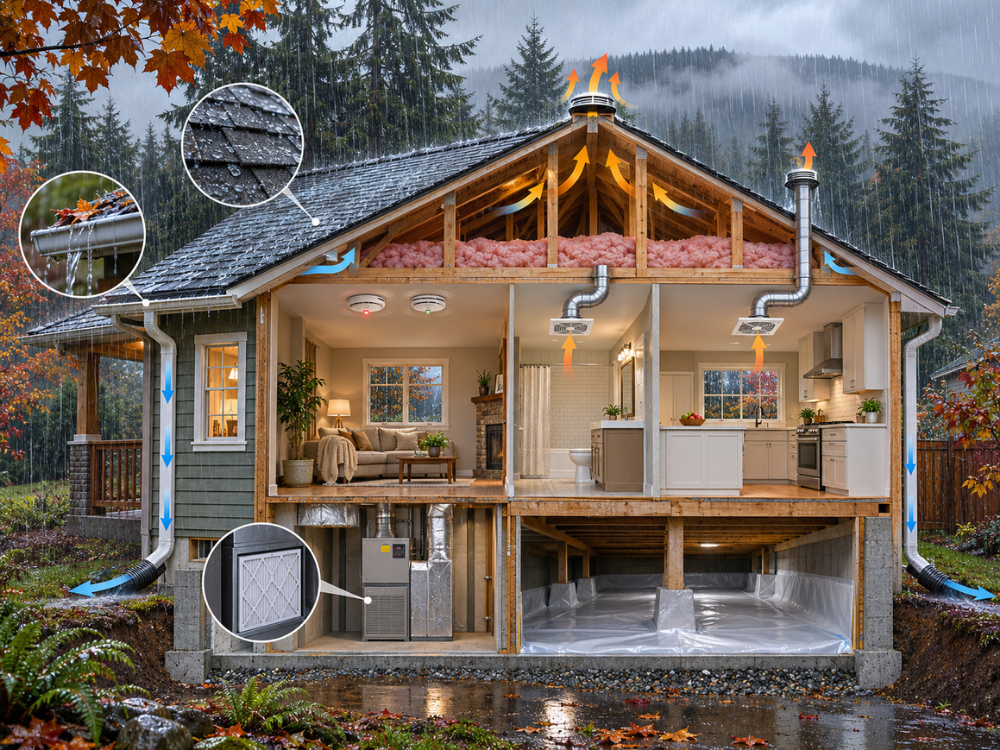 Are Your Smoke And Carbon Monoxide Alarms Working Before The Windows Close?
They need to be, because closed-up homes with gas appliances, wood stoves or an attached garage are exactly where carbon monoxide becomes a concern.
- Test every alarm with the test button, and replace batteries where the alarm uses them.
- Check the dates. Alarms wear out and carry a manufacturer date. If you cannot find one, or the unit is old, replace it.
- Cover the sleeping areas. Alarms belong on each level and near bedrooms.
- Never run a vehicle in an attached garage, even with the door cracked.
This is the cheapest and most important item on the list. It takes ten minutes.
Why Does The Willamette Valley Rain Season Matter For The Roof, Gutters And Siding?
Because rain in this climate is steady rather than dramatic, and small problems with water show up slowly and cost a lot to fix later.
Moss grows well on shaded roofs here, and a thick moss mat can hold moisture against roofing and lift shingle edges. Gutters packed with leaves back water up under the roof edge or push it down against the foundation.
On a dry afternoon, look at your roof from the ground with binoculars. Look for lifted or missing shingles, heavy moss, and damaged flashing around chimneys and vents. Clear gutters and downspouts, and make sure downspouts carry water away from the house. Then watch the next rainstorm. Water spilling over a gutter, or pooling near the foundation, tells you exactly where to start.
Stay off steep or wet roofs. If something needs a closer look, a roofer or an inspector can do it safely.
What Should You Check In The Crawlspace And Attic When The Wet Months Begin?
Check for moisture, because crawlspaces and attics are where wet-season problems hide.
Many Willamette Valley homes have a crawlspace. When the rain starts, look for standing water, damp insulation that has dropped from the floor above, a musty smell, and plumbing drips. Make sure the vents or access are not blocked by soil, plants or stored items. If you are not comfortable going in, you do not have to. A flashlight at the access panel will tell you a lot.
In the attic, look for daylight where there should not be any, stains on the underside of the roof deck, and insulation that is compressed or wet. Bathroom and kitchen fans should vent outside the house, not into the attic.
Jeremy came to home inspection from the Oregon residential general contractor side of the business, with 10 years in construction behind him, and he has been inspecting homes since 2001. That background is why moisture paths, venting and framing get so much attention in a HomeCheck report.
How Do You Keep Condensation And Humidity Under Control In A Closed-Up House?
Use your exhaust fans, run them long enough and keep the air moving.
When the windows stay shut, cooking, showers and laundry add moisture to the air. If it has nowhere to go, it shows up as fogged windows, damp window sills and, eventually, mold growth on cold surfaces.
- Run the bathroom fan during the shower and for a while after.
- Use the range hood when you cook, especially on the boiling pot.
- Vent the dryer to the outside, and clean the lint trap and duct.
- Open a window for a few minutes now and then on a dry day.
If you see persistent condensation, black spotting on walls or ceilings, or a musty smell that comes back, that is worth having looked at.
Call (541) 914-0559 or schedule your home inspection online.