
 In Eugene and across Lane County, the bugs that eat houses are subterranean termites, dampwood termites, carpenter ants, wood-boring beetles and decay fungi, and a wood destroying organism inspection is how you find out whether any of them are at work in a home. Living in the Pacific Northwest, our cities are carved out of a vast natural landscape. We watch old leaves fall and decompose into fertile soil through moisture, changing temperatures, tiny microorganisms and a diverse array of insects. That same natural process does not stop at leaves, and it does not stop at the edge of your property.
We see it in fences, garden sheds, old barns, and the worn corners of homes and decks where paint has chipped away. Nature is always ready to reclaim its materials, and that includes the wood supporting our homes. Jeremy Moody of HomeCheck Inspection Service has been inspecting homes since 2001, with nearly 7,500 inspections completed, and has been providing wood destroying organism (WDO) inspections for over 20 years. This guide explains what to look for, which organisms matter in the Willamette Valley, and how to protect your investment.
What Is The Hidden Threat To Your Home?
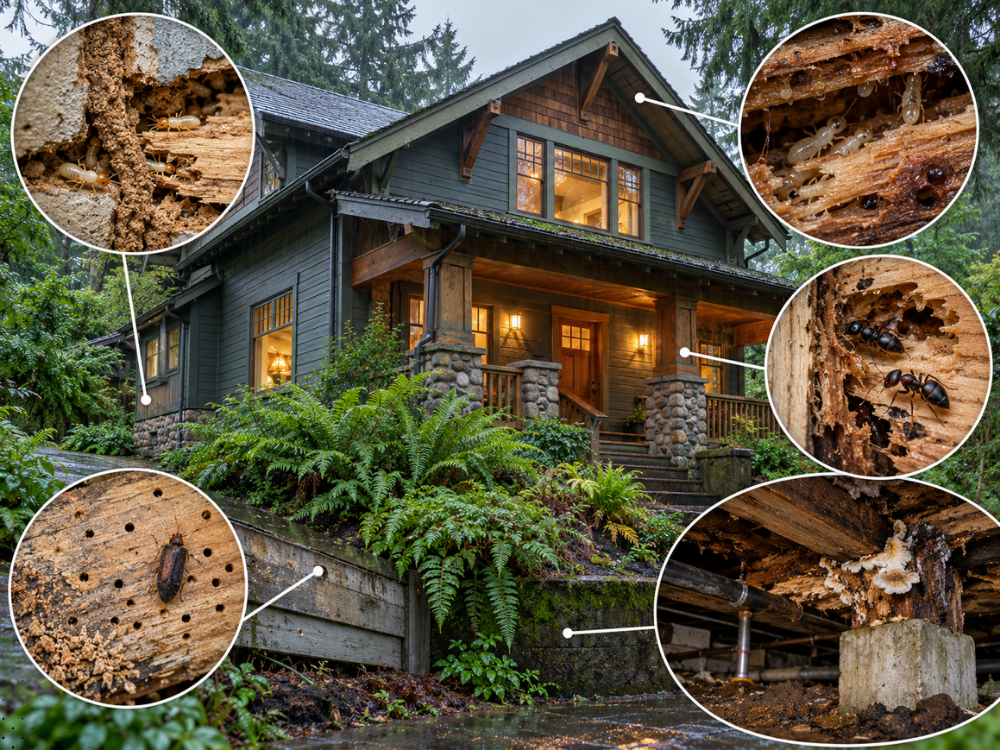
The hidden threat is wood-destroying organisms working in places you never see. Nature does not just reclaim exposed wood; it also finds its way into the unseen areas of our homes, such as floor and roof supports and the voids between our walls. Subterranean termites, dampwood termites, carpenter ants, wood-boring beetles and fungi quietly break down these structures, causing significant damage over time.
Many of these wood-destroying organisms go unnoticed. Their presence is often indicated by subtle signs, like shelter tubes that resemble cobwebs, or fecal pellets that can be mistaken for dirt or rodent droppings. That is why a trained eye matters: the evidence is usually small, and it is usually in a crawlspace, attic or wall void, not in plain sight.
Which Wood-Destroying Organisms Are A Concern For Eugene Homes?
Five groups of organisms matter most for homes in Eugene, Springfield and the rest of Lane County. Each one attacks wood in a different way, and each leaves different clues:
-
- Subterranean termites live below ground and travel up through shelter tubes to feed on wood, damaging the lower structural members of the home.
-
- Dampwood termites thrive in moist conditions and infest areas with earth-to-wood contact. They can start in a crawlspace and spread to the rafters.
-
- Carpenter ants are often mistaken for “flying ants” and can cause severe structural damage if left undisturbed.
-
- Wood-boring beetles breed in old, well-seasoned wood in unheated, damp spaces and can slowly cause damage if left undisturbed for repeated seasons.
-
- Fungi decay, commonly called “dry rot,” is prevalent in our damp environment. It colonizes wood rapidly, turning fallen logs and stumps back into soil.
Even minor home maintenance oversights can create conditions that invite fungi to grow on unsealed siding and decks, and where moisture intrusion occurs in attics, crawlspaces and between walls. In a region known for its rainy season, moisture is the common thread, and it is also the thing a good inspector spends the most time tracing.
Why Does Fungi Decay Matter So Much?
Fungi decay matters because our damp climate gives it what it needs to spread. Where water gets into a house and stays, wood stays wet, and wet wood is where decay fungi take hold. The most common culprits are small ones: a gutter that overflows, siding that has lost its paint or sealant, a deck board that never dries, or a leak that has quietly wet an attic or crawlspace for several seasons.
Jeremy brings an Oregon residential general contractor background (CCB #200742) and 10 years in construction to this question. He understands how a house is built, where water tends to enter, and which repair fixes the cause instead of just the symptom.
 How Do You Keep Your Eugene Home Off The Menu?
Keep your home off the menu by controlling moisture, removing wood-to-soil contact and having the house inspected by someone who knows what to look for. With plenty of wood in Oregon for insects and fungi to consume, small habits make a real difference:
-
- Keep gutters and downspouts clear so water moves away from the foundation.
-
- Reseal or repaint siding, trim and decks where paint has chipped away.
-
- Keep soil, mulch and stored firewood away from wood that is part of the house.
-
- Look into the crawlspace and attic now and then for dampness or anything that looks like a shelter tube.
-
- Fix leaks and plumbing drips promptly, since moisture is what invites decay.
If you are buying a home, or want to ensure your current home remains structurally sound, a professional WDO inspection is a key component of a thorough home inspection. Identifying and addressing issues early can often save thousands of dollars in repairs and provides peace of mind. If you are weighing whether to inspect before selling, read our guide to pre-listing vs. buyer’s inspections, and see what to expect on the Your Inspection page.
Frequently Asked Questions About Wood Destroying Organism Inspections
What is a wood destroying organism inspection?
A wood destroying organism (WDO) inspection looks for termites, carpenter ants, wood-boring beetles and decay fungi, and for the damage and conditions that go with them. It is separate from a standard home inspection.
What are the signs of wood-destroying organisms?
Signs can be subtle, such as shelter tubes that resemble cobwebs, or fecal pellets that can be mistaken for dirt or rodent droppings. Many of these organisms go unnoticed until significant damage has occurred.
What is “dry rot,” and is it common in Oregon?
“Dry rot” is the common name for fungi decay. It is prevalent in our damp environment and can grow on unsealed siding and decks, and wherever moisture gets into attics, crawlspaces and between walls.
Ready To Protect Your Home? Call Or Schedule Online
HomeCheck Inspection Service has served Lane County since 2001, with nearly 7,500 inspections. Jeremy Moody is an InterNACHI Certified Professional Inspector (#NACHI05051998), an Oregon Certified Home Inspector (OCHI #504), holds Oregon Construction Contractors Board license CCB #200742 and is an Oregon Pest Control Association member (OPCA #165737), with an Oregon residential general contractor background and 10 years in construction. Call (541) 914-0559 or Schedule Online.